Archives: 2012

In the End

On this, the day that the Mayan calendar runs out of time, I am pleased to enter into the subtle, timeless acoustiplasm of Silence Radio with a new voice castaway, In The End.

Silence Radio is a project sponsored by l’Atelier de création sonore radiophonique , a Brussels-based independent public-funded organization founded in 1996. ACSR’s main purpose is to help beginning producers and artists with their first projects in the realms of creative radio and audio. ACSR is also responsible for a festival named Radiophonic, whose last edition was in 2007, yet with a welcome resurrection promised for November 2013.

SilenceRadio was initiated in 2005 by sound artist-engineer Irvic D’Olivier, in collaboration with (among others) Etienne Noiseau, who writes:


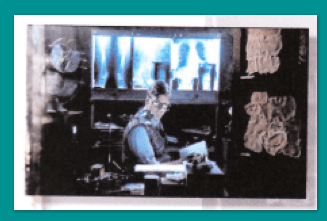
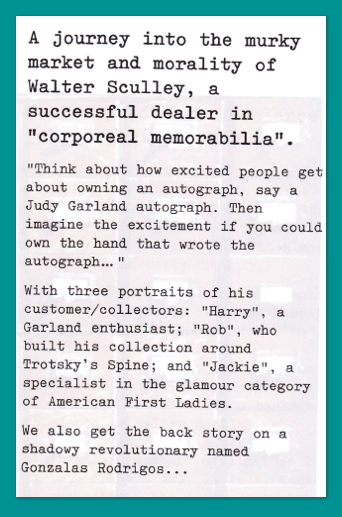
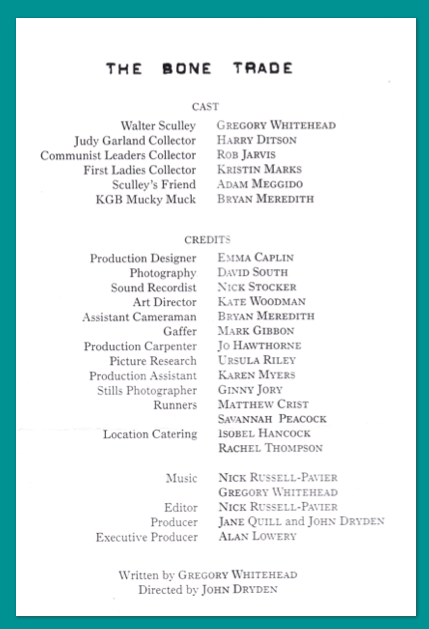
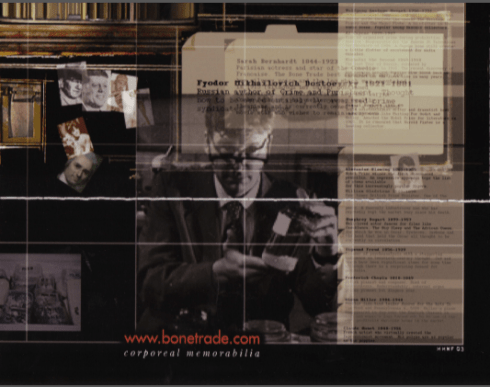
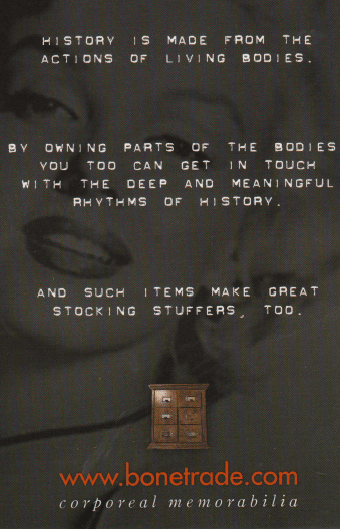
The Bone Trade

SHE COLLECTS THESE

The Bone Trade and central character Walter Sculley have migrated through various media, beginning in 1996.

Sculley’s market for corporeal memorabilia first emerged as part of a BBC radio “conversations with possible people” series Talk to Sleep, produced in collaboration with Goldhawk; then was made into a short film, directed by John Dryden; generated a website, which functioned for a number of years; subsequently published as a dialogue in Cabinet, with an update to follow; and finally, featured as a mixed media installation at Mass Moca, including a series of photomontages by Harry Willis Fleming, who also designed the website and has been a key bone trade affiliate since early days, together with Jane Wildgoose of the Wildgoose Memorial Library.

Even today, Sculley continues to hold forth from time to time on developments within the marketplace.


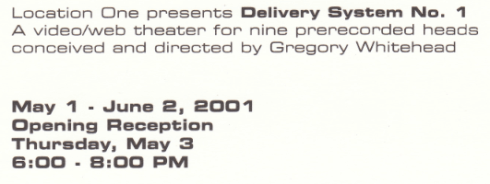
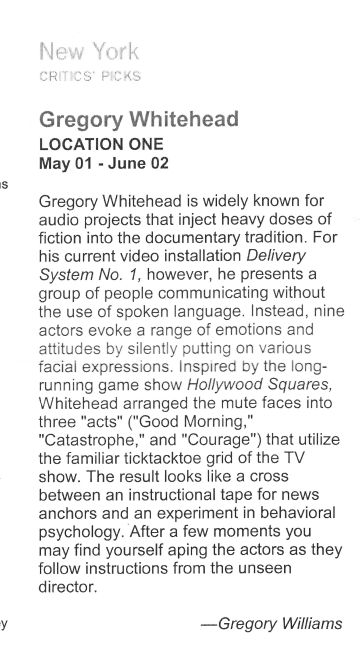
Delivery System No. 1

After the “disappointment” of Y2K, there was a palpable hunger for apocalyptic semiosis in the air; the language of disaster seemed to permeate through all media. Three months later the disaster arrived, with ground zero just a few blocks from Location One.

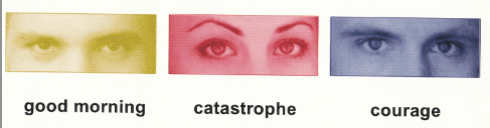
For the installation, we used three projectors, each section looping independently: Good Morning, Catastrophe and Courage.

ART FORUM.com, June 1, 2001

Assisting on the project were Heather Wagner and François Bucher, who also produced a short video documenting the process, whereby the nine actors responded to audio tape instructions, each in their own style, with additional direction from me: the nine heads in synchrony comprise the Delivery System. Hollywood Squares, following the pulse of The Catastrophe.


Pressures of the Unspeakable

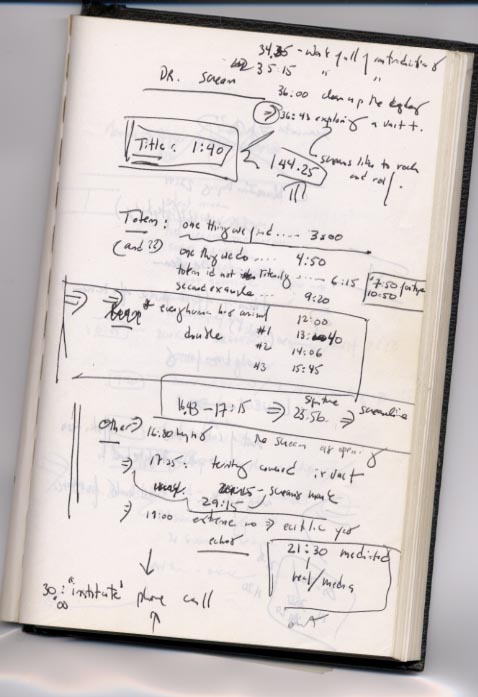
October 3,1991, I arrived in Sydney, Australia with little more than a general concept of an Australian Screamscape, carried inside the fictive envelope of an imaginary Institute for Screamscape Studies, of which I was  the founding director. Over the following weeks, in collaboration with a small network of associates, we would give voice to a continental nervous system, coaxing the underlying  screamscape out into the public airwaves.

EXCERPT FROM SCREAMSCAPE

Everything that happened in, across or through the circuits of the screamscape would become part of the screamscape flow, culminating in a national broadcast. The process followed three stages:

1. The elaboration of a screamscape infrastructure: founding of the Institute, establishing a 24 hour answering machine, called the “screamline” in reference to the acoustic journey that screamers take into their own interior space while screaming; the designation and opening of  a dedicated scream room within the Australian Broadcasting Corporation (ABC); and the circulation of “scream discourse” within various news media, via guest appearances on talk shows.

JOURNEY TO THE INTERIOR

2. Monitoring of the scream flow, and the development of various techniques for scream hermeneutics that would allow individual screamers to find their own rightful place within the national screamscape.  At this stage, periodic memoranda and reports were circulated through the ABC and the University of Technology regarding the genesis of the screamland and on various aspects of scream theory; econdary publicity accomplished through release of select screams to television and radio programs. Lubricated by discourse and publicity, the scream trickle soon became a flood, in both the scream room and on the screamline, and the producer “nodes” at the Institute began to feel the first effects of The Pressure.

In addition to framing the nervous system, the telephone-microphone-tape recorder-radio circuitry also provided the key for the acoustic demarcation of pressure in the system: distortion, the disruption of digital codes inside the scream room; pure unmanageable noise. The scream as animal energy ruptures signal clarity, exceeding the thresholds of communications technologies not designed to accommodate such vocal intensity.

3. The completion of the circuitry, the breakdown of the last nodes of resistance within our own nervous systems, the passage of all screams fluidly through a now massive network of private and public scream events. Strange things began to happen as we listened again and again to hundreds of “blown” and distorted screams; a networked dreamland turned for a while into screamland blues.
FOR PRIVATE USE; FOR BROADCAST OR OTHER PUBLIC USE, PLEASE EMAIL ME

Last came the national broadcast of the assembled report, transmitted by The Listening Room, followed by additional post-broadcast screamline calls: objections, responses, post-screams, reflections, wrong numbers, confessions, and bold polemics.

Two days after the repeat broadcast, after a moment of silence, the screamline was unplugged, and the nervous system was put to rest; all scream donations were deposited in the “scream bank”, and archived for study by future generations of screamscape researchers. The last memo and ultimatum from the Institute (lodged as it was at the Ultimo ABC) circulated, including a quote from Ludwig Wittgenstein:
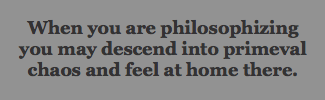
At times, the research clinic of the production studio did indeed feel like a psycho-acoustic descent into primeval chaos. Yet the magnificent, affirmative, ecstatic, violent, explosive and celebratory nature of the materials restored us, if not to “home”, at least to a very real, and very human place.

Pressures of the Unspeakable has aired numerous times around the world; the concept has been repeated in different shapes and variations in other countries, sometimes with me present, other times as a distant (or even unknowing) collaborator.

The Australian Screamscape would not have been possible without the help of many associates, most notably the peerless Listening Room executive producer Roz Cheney, whose skill and craft was only matched by her generosity of spirit; the discriminating ears of the brilliant John Jacobs; the unflinching airborn dasein of my mentor and friend, poet Martin Harrison; and of course the hundreds of callers and scream donors, in all their energy and invention.

Click on the screamers below for the complete script.

SCRIPT FOR PRESSURES


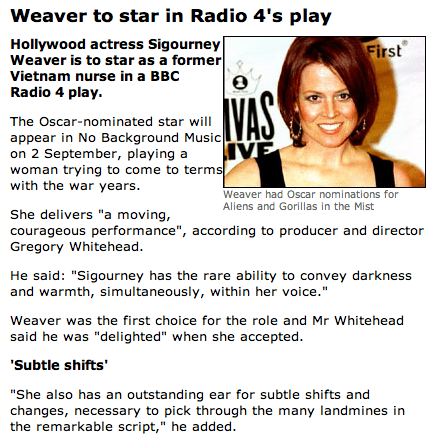
No Background Music

An adaptation for BBC radio 4 of a stage play by Normi Noel, itself based on poems, letters and conversations with former Vietnam field nurse, Penny Rock.

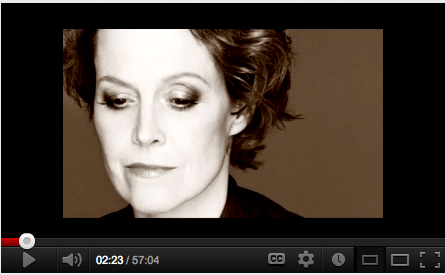
We only had two days in the studio (the now sadly closed Looking Glass); a challenging schedule for material of this depth and complexity. Fortunately, Ms. Weaver was equal to the task, and it was a pleasure to work with her, and with her extraordinary voice.

The two days were harrowing, exhausting and exhilarating in equal measure. With the clock ticking down, we found time at the end to have some fun improvising with singing and other vocalizations, which would prove invaluable as transitions and beds. Those final recordings also gave us a way back into the present from the dark and traumatic memory play.

Elements for the sound design included various bass guitar stings and manipulated amplifier throbs and pulses; I also used little noise scraps and tears as acoustic “wounds” to punctuate (and even puncture) the montage; there was no way this space of trauma should ever be made “seamless”. With each scene, I searched for a tone and overall aesthetic that reflected the fractured yet loving (against all odds) qualities in Ms. Rock’s fearless recollections.

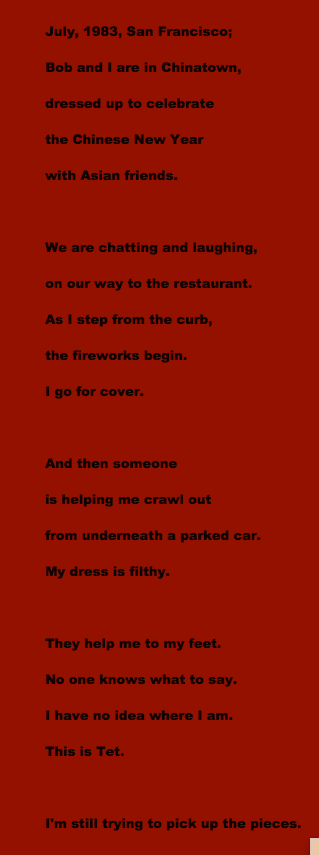
EXCERPT: THIS IS TET

For now, at least, the entire play seems to have been uploaded to youtube (not by me):

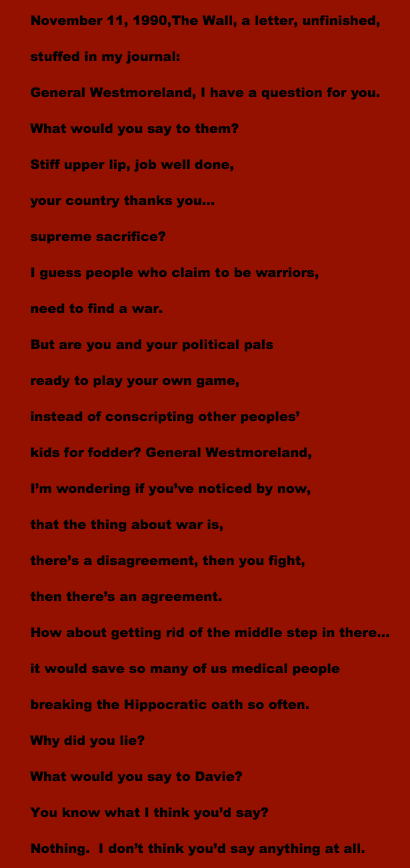
A final excerpt from the script, with a message that remains all too contemporary:


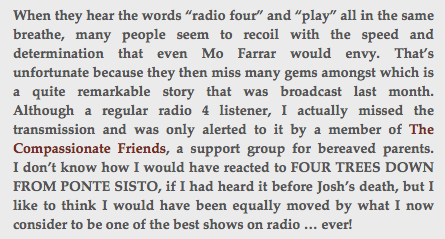
Four Trees Down from Ponte Sisto

I first came across a sampling of Sharon Charde’s poetry completely by chance, while browsing through a local women’s magazine. I was instantly struck by the disarming directness and documentary detail in poems that dared to articulate the unspeakable loss of her son Geoffrey while a student abroad, under circumstances that remained obscure, with no known witnesses. At the bottom of the page, there was mention of a forthcoming reading at a library nearby, which I attended. As Sharon read, I was once again moved by the calm precision she was able to bring to the most terrible scenes, and by the rich polyphonies that gave subtle dimension to such a raw wound:

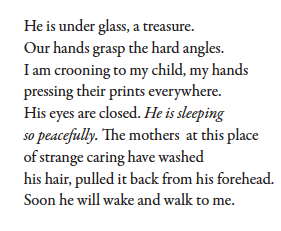
stanza from MOTHER’S DAY AT THE MORGUE

That evening confirmed my sense that her poems, written across three decades, comprised an important body of writing that deserved a wider audience. Fortunately, Sharon agreed to the idea of a BBC radio adaptation, and generously provided me with Geoffrey’s own journals, photographs and documents, as well as many supplementary stories and recollections, some of which I then incorporated into the script. Since her writings obliterate the idea that grief unfolds in tidy linear stages, I became increasingly committed to the fundamental truthfulness of an unresolved narrative structure, where the traumatic moment of the fall remains vivid, through to the very last sound.

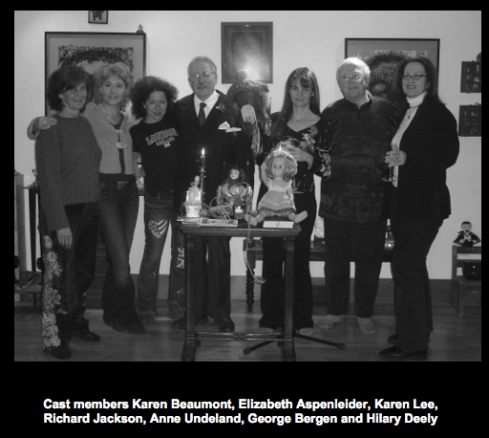
We considered many actresses to give voice to the play, though my first choice was always Anne Undeland, who brings an open spirit of brave simplicity and deep insight to everything she does. I knew that Anne had recently performed a one woman show based on the poetry of Emily Dickinson, and she has worked with me on a number of other radio plays, including The Loneliest Road. As it happens, she also lived in Rome during the 1980s, and knew the Trastevere neighborhood where Geoffrey had lived, which helped bring the story fully into the present.

GIVING VOICE TO THE WOUND

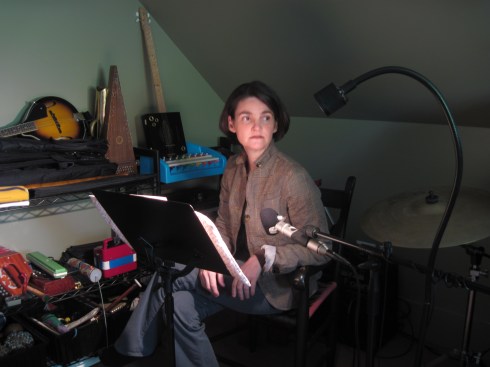
For music and sound design, I had in mind the image of a precious Roman mosaic that I had let slip from my hands, and thus it was left for me to piece it together again. There would be jagged edges to be sure – imperfections – and sometimes the edges might cut fingers. To achieve this acoustically, I improvised to recordings of Anne’s voicings on mandolin, bowed psaltery and a cigar box guitar, and then added a variety of sounds to the mix, including the snapping of twigs and the crushing of dry leaves.

I knew Geoffrey liked Simon & Garfunkle, and that he had used a quote from the song “Old Friends” in his High School yearbook. Though I never actually play the song, those chords and rhythms were certainly on my mind as I slowly assembled the final montage.

An informative article by the Litchfield County Times can be found here.

The play will air on BBC Radio 4 on Friday, June 29th. The first three minutes are excerpted here:

Post-broadcast comments on Netartery

From the blog Beyond Goodbye:

CLICK FOR LINK TO ENTIRE PLAY

CLICK FOR LINK TO ENTIRE PLAY


Project Jericho

A hybrid fiction/documentary produced in close collaboration with Mark Burman for BBC 3’s (relatively) adventurous Between the Ears program.

Mark gathered the interview material with a focus on the history of sound-based weapon systems, and I created the character of Colonel Walter Manley, founder of the Jericho Institute, a shadowy research center with a mission to weaponize the Voice of God (VOG).

Mark also recorded a perfect group clamor from the BBC chorus, as well as a number of shofar blasts, while I created several tonal beds, for texture and continuity. We then gradually composed the montage and mixage, bouncing tracks back and forth between our studios, on either side of the Atlantic, for a February 2006 broadcast.

project jericho 2

From Steven Goodman’s fantastic (in every sense) history of sonic warfare:

swarfare


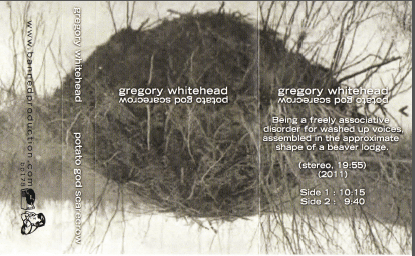
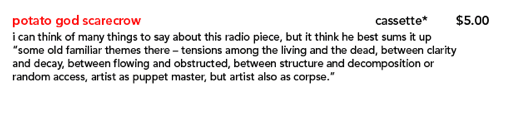
Potato God Scarecrow


PGS

A FREELY ASSOCIATIVE DISORDER FOR WASHED UP VOICES
{Below, excerpted from Mainly the Mysteries.}

I am fascinated by the neurosensual implications of the North American beaver, an artist engineer whose creative capacity is not centralized within its tiny brain but dispersed from head to tail.

To my mind, such capacity has significant implications for narrative structure, and somewhere in the middle of the intricately beavered wetlands, along one of those rich edges where a few loose blazes suggest bright neural pathways cutting through dense limbic muck, a voice says, We have these many many many many mysteries and it’s mainly the mysteries that enthrall me when I’m walking along. A few things I know where they came from, most I don’t.

It is still mainly the mysteries that enthrall me, too, and I still believe in the poetic vitality of edges, which is where the mysteries reside. Edges between eros and thanatos, seduction and oblivion, order and chaos; between sense and nonsense, facts and fables, the living and the dead; between the lover’s whisper and the warrior’s scream. Friction among all these edges still creates ample energy to float my canoe among the beaver lodges.

And yes, I still believe in the power of radio to create community, even for an hour or two, and to feed the imagination with nutrients not offered elsewhere, and I believe that offering such a feast remains a worthy mission for public broadcasting in particular. Diversity is always desirable, and that includes poetic and aesthetic diversity. When we drop these qualities to the bottom of the food chain, we starve our capacity to imagine a viable future for our mysteries.

BP


PKD

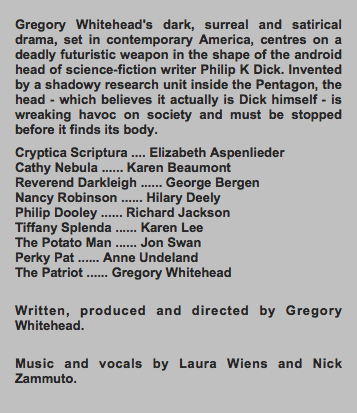
An anticipatory documentary for BBC radio 3, produced in collaboration with the BBC’s Mark Burman. Based very loosely on the life and writings of Philip K. Dick, whose achievements as a writer and thinker are only now being given their due.

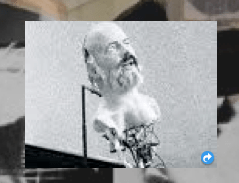
Our structural idea was simple: the weaponized android head of PKD has found its way into the general population; as it passes from hand to hand, the head leaves behind a series of rips and tears in the fabric of reality.

Performed by the talented members of my ensemble of actors here in the Berkshires, all of whom tolerate my directorial idiosyncrasies; and greatly aided by the ears and brain of Nick Zammuto, whose own work has been a major source of inspiration for me in recent years. Also featuring the exquisite voice of Laura Wiens, supported by Billy Sokol on lap steel.

NICO ZED & G. DUB

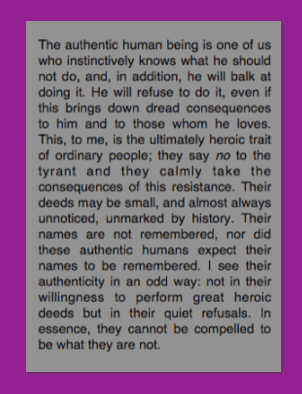
And finally, one of my favorite quotes from PKD, regarding one of his central literary and philosophical themes, the “authentic human”:


What Of This Night?

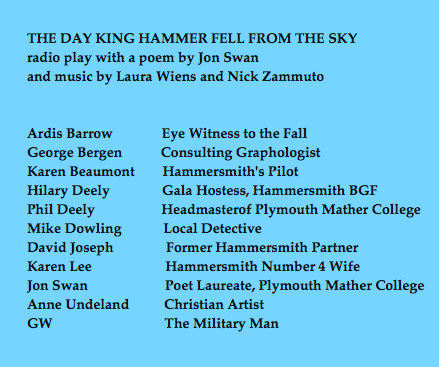
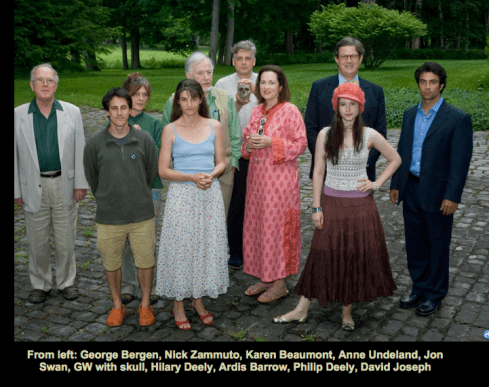
Being, the day King Hammer fell from the sky.

A play in the form of a documentary, examining the aftermath of a shocking fall from the heavens, broadcast on BBC 4 in 2008.

In the summer of 2007, at the bursting point of a historic credit bubble, a famous hedge fund manager named Harry Hammersmith pledges one billion dollars to his beloved Alma Mater, an elite College south of Boston named Plymouth Mather, founded in the year of our Lord 1728 to honor the memory of one Cotton Mather, a distinguished puritan zealot and accomplished witch burner.

Sir Harry Hammersmith, knighted by the Queen of England, and known throughout the financial world as “King Hammer”, plans to deliver his big swinging — gift — in person: at high noon, he shall arrive at the dead center of the Plymouth Mather quad by parachute.

It is a very hot summer day, not a cloud in the sky, seconds before the appointed hour: the elegantly attired guests have assembled upon the freshly mowed green, eager to witness such a sublime moment in the history of philanthropy, the largest single gift ever made to a private institution of higher learning.

Later, during the Kerry Commission Hearings on the Violent and Untimely Death of Sir Harry Hammersmith, a student who had been hired to pour champagne gave the following eyewitness report:

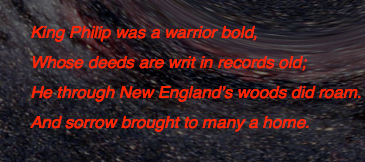
SONG FOR METACOM


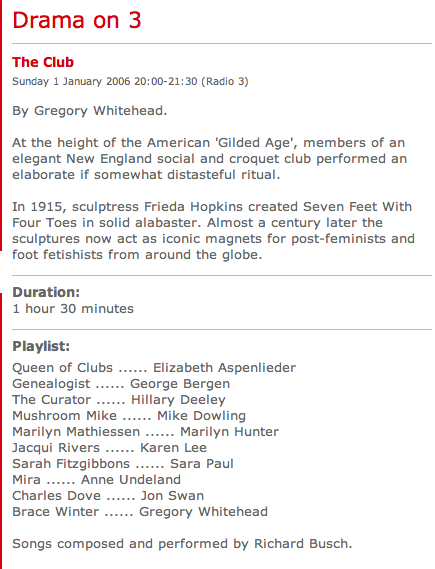
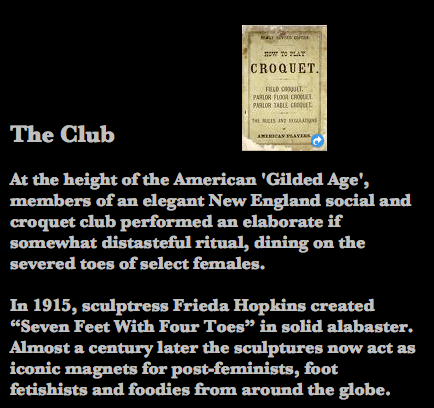
The Club

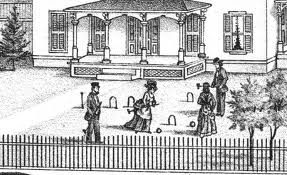
Being a documentary exploration of an imaginary New England croquet club.

A play in the form of a documentary interpreting the trace vibrations of a Gilded Age headache that began in the feet. Created for the BBC in 2005, and broadcast on the New Year of 2006, at the apex of the more recent Gilded Age:

WELCOME TO THE CLUB

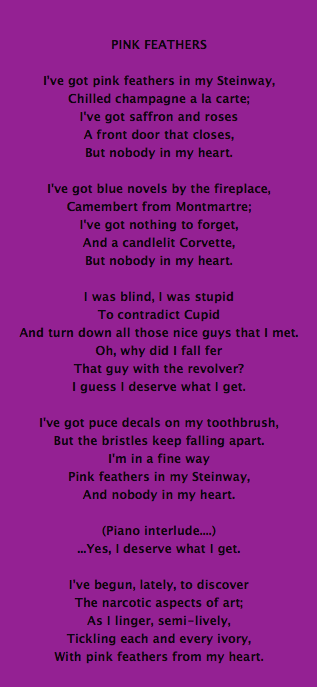
Featuring brilliant music by Richard Busch, who also contributed lyrics for the Club’s theme song: I’ve got pink feathers in my Steinway, and nobody in my heart.

TRICKY WICKETS
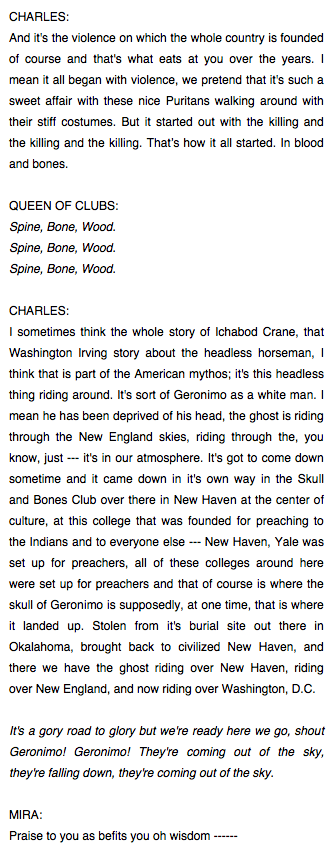
spinebonewood

THE NARCOTIC ASPECT OF ART


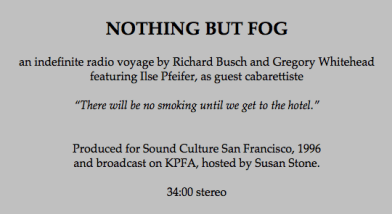
Nothing But Fog

____

A radio navigation commissioned by Sound Culture 1996 in San Francisco, with radio works curated by Susan Stone. Produced in close collaboration with Richard Busch, with inspiration from his exquisite Drei Nebel Lieder.

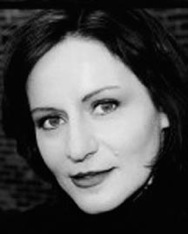
Text derived through the improvisational “dealing” of cards based on Mexican Lotería, liturgical fragments and the maritime alphabet. Performed by GW, Richard Busch and cabaret singer Ilse Pfeifer.

ILSE PFEIFFER: NEBEL-STIMME

Other materials include scraps from a live performance at an International Feature Conference in Basel, and instructional texts on the art of navigation. Sound beds composed by GW and RB. Recorded in the sea-crow media studio on Nantucket Island, over the course of several foggy days in late winter.

Following the premier broadcast on KPFA, Nothing But Fog has aired numerous times throughout Europe, North America and Australia. The below link is for private use within the creative commons; for broadcast or festival rights, please email me.

____

NOTHING BUT FOG


Leave It or Double It

On this, the John Cage Centennial, I offer Leave it or Double it, a bit of radiophonic fungus produced on invitation from Transmission Arts, with its premier broadcast on WGXC a few days ago.

In fruiting the fungus, all I knew from the outset was that I would aim for a duration of 33:33, and that I would use translated excerpts from the Turin newspaper La Stampa as source material – reviews regarding the 1959 appearance of a young American composer named John Cage on a very popular Italian television quiz show, Lascia o Raddoppia.  I was careful not to practice or rehearse the texts in any way, but to confront them in a single take, with no way to correct mushroom pronunciation mistakes.

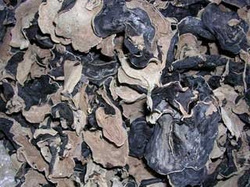
My most extended personal conversation with Cage transpired in 1989 at an unlikely location: Skywalker Ranch. I noticed that Cage was not eating the catered food; he had his own little dish of brown rice and mushrooms. This led to a lively and comic conversation about mushrooms during which my relative ignorance was gently exposed, and I have since come to believe that Cage’s foraging expertise and his fascination for these strange organisms offer fresh ways to understand his philosophy of composition.

The performance he gave at Skywalker (How to Get Started) used the decompositional process of voicing a passage, then playing a recording back into the room while voicing a second section, and so on, gradually creating a rich fungal compost of words, ideas, and decay. The Skywalker auditorium was thus gradually transformed into a mush-room. This would be my structure as well, though performed in private, only made public through the radio broadcast. Each little mention in La Stampa receives its own generation, regardless of length.

Additional tracks are improvisations played by me on bowed cigar box guitar, plucked psaltery and gently thrummed turntable. I kept post-performance shaping to a minimum, and let myself be guided if not by the I Ching, then by the whispers of Hermes and by the forager’s attentive disposition, so present in the art of John Cage.

LEAVE IT OR DOUBLE IT


All About Squid

William S. Burroughs suggests that language often behaves like a virus as it passes from mouth to mouth, gathering microbes along the way: microbes provoking strange mutations that may express themselves through the most toxic utterances.

With the below acoustic amuse bouche dating from the year 2000, I propose that at certain times and at certain places, language may also behave like  a fungus, a fungus that if left to its own urgent proliferation soon becomes entangled in the axons and dendrites of the human brain, leaving us with the severely impaired fluency.

I have experienced the fungal quality of language myself when on a hot day in the New York subway, I chanced to hear one departing passenger say to another: So you want to talk about squid? Then they were gone, leaving me in deep corn smut. For whether it was something in the actual voice, or some magical mycological chemical embedded in that precise arrangement of phonemes, it was only a matter of minutes before my entire brain was helplessly possessed by a numbing and relentless repetition of this one cruel sentence, in every stage of fungal bloom and decay — so you want to talk about squid?

Somehow, through instinct or intuition, I sensed that my only hope was to write down what I was hearing in my head, and as I did so, indeed, a squidlike form began to emerge on the page, a form that then became a score for a bit of fungal audiophony:


Evil Axis

Sometimes, the best way to defuse loaded phrases is to stare them down. An early version of Evil Axis was commissioned by The Verb in 2001 as an “audio cartoon”; then recreated in a slightly adjusted version in 2006 for a series of live-to-air performances.

The piece is composed from a series of neologisms and noms de personne through a process of single letter rotation. The series of new words then became the basis for a narrative intended to defuse the word grenade, at least for a few moments.

Hereby donated to the Creative Commons: why oh why oh why are you so evil……


The Meaning of Martha

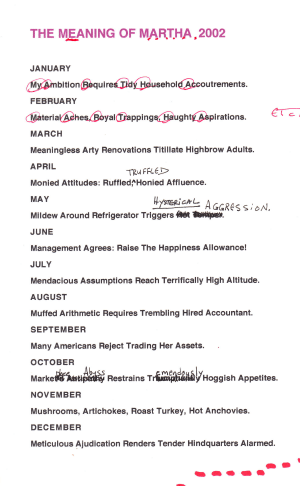
CLICK FOR SCRIPT PDF

In 2002, The Verb commissioned a brief series of four “audio cartoons”. One of them concerned Martha Stewart, and her annus horribilus following certain stock market “indiscretions”.

Martha: the iconic brand who doubles as a cipher, begging to be decoded. The script derives from a series of twelve sentences whose words  begin with the letters M, A, R, T, H, A; these were then voiced live-to-air (with recorded back track) according to rhythms set by the calendar year. Performed many times over in cabarets and mixed bag sorts of live-to-air occasions, The Meaning of M.A.R.T.H.A. :

LIVE AT THIRD COAST FESTIVAL 2002


Vicekopf

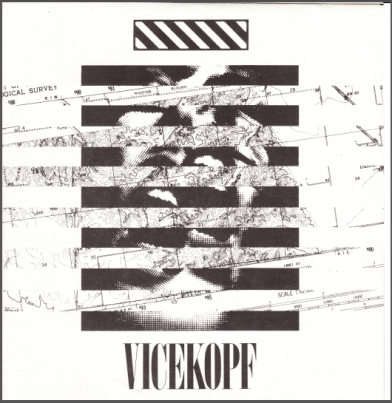
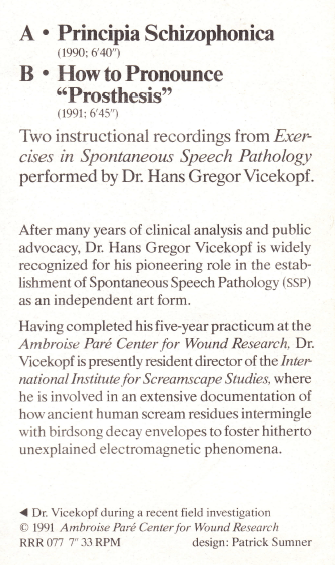
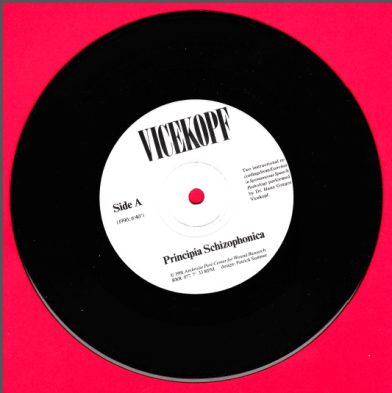
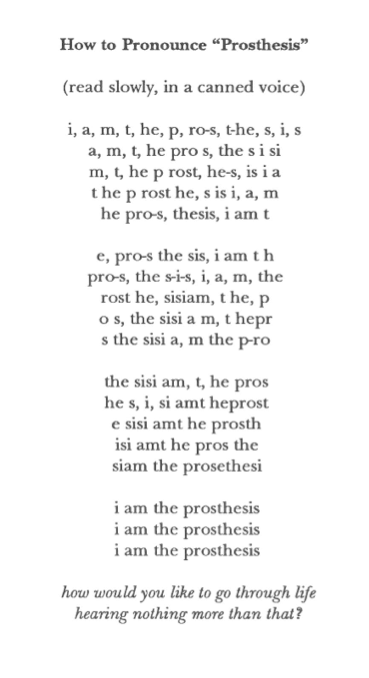
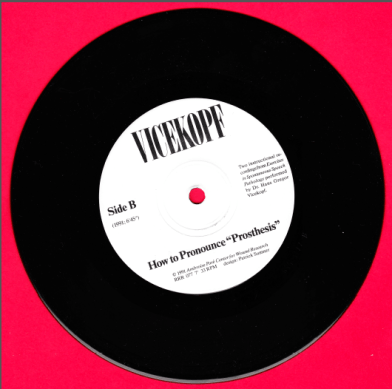
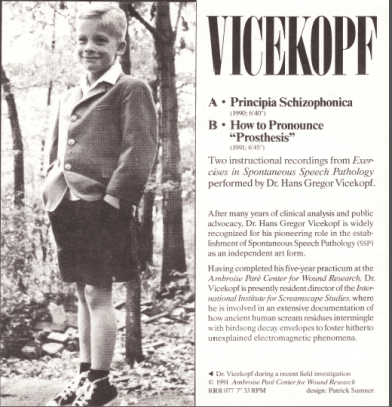
A RRR vinyl release from 1991. Extremely rare, though Principia Schizophonica was subsequently released on The Pleasure of Ruins cd, while How to Pronounce ‘Prosthesis’ was released on Tellus # 25. Both pieces have been broadcast countless times.


Danse Macabre

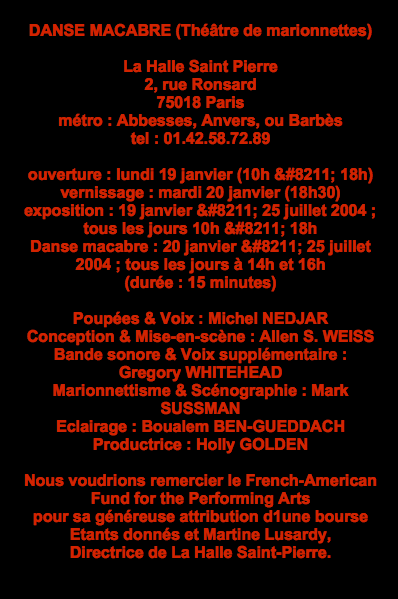
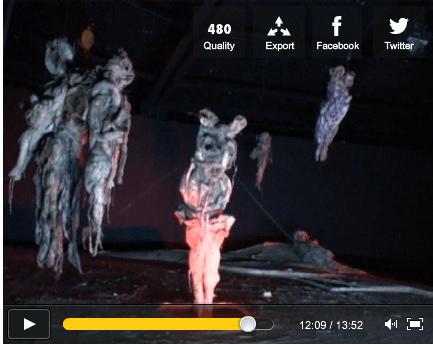
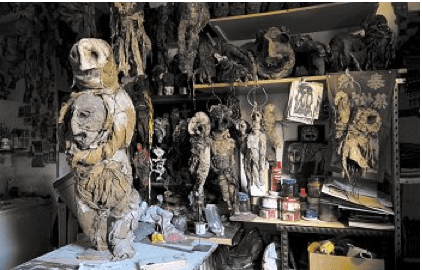
A collaborative marionette theatre from 2004, inspired by (and using) the extraordinary dolls (and voice) of Michel Nedjar. As described by Allen S. Weiss:

Monsters manifest the plasticity of the imagination and the catastrophes of the flesh. Monsters exist in margins. They are thus avatars of chance, impurity, heterodoxy; abomination, mutation, metamorphosis; prodigy, mystery, marvel. Ultimately, monsters are indicators of epistemic shifts. As such, Nedjar’s dolls are personifications of anguish, memento mori, simultaneously creations in order to remember and remembrances in order to forget.

They effectuate a return of the repressed, a precarious overloading of the memory system that permits a mourning without which history itself is an abomination. These anxiety producing objects evoke a counter-sublime, indicating those terrors, inexorable and insidious, that exist within our own bodies.

___

DOLLS CHEZ NEDJAR

The audio track (which also served as the “pulse” for the puppet master, Mark Sussman) has been broadcast on its own a number of times, and is linked through the simple frame animation below. The voice belongs to Michel Nedjar, and his performance includes passages voiced in an imagined variation of Yiddish, conjured from his childhood.


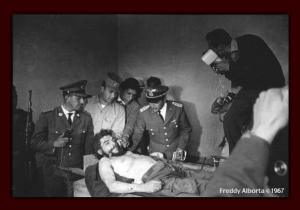
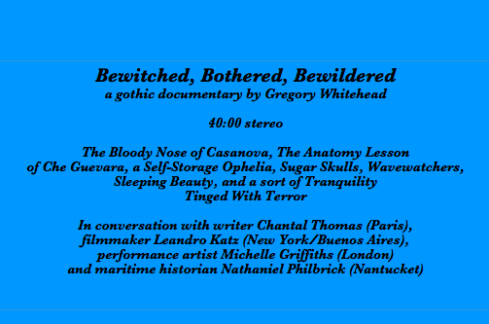
Bewitched, Bothered, Bewildered

Bewitched, Bothered, Bewildered is a freely associative “gothic documentary” essay produced during 1997, and first broadcast by the Australian Broadcasting Corporation’s excellent Listening Room program in 1998, and since broadcast numerous times elsewhere, with themes that remain stubbornly contemporary.

Four very different conversations arranged into rotating quatrains, offering floating buoys for the listeners, who are invited to voyage down a foggy coastline by dead reckoning; the essay also became, inevitably, a meditation on the nature of making radio, for radio journeys often end in shipwreck, airwaves offering an electronic mirror for the submerged graveyard of the Atlantic. How do we navigate through such dark and beautiful vibrations?

Inspiration for the structure came from walks on the labyrinth of paths and tracks that wind through the Nantucket moors, in the company of Nat Philbrick who was working on his masterful In the Heart of the Sea at that time. The old Nantucket phrase for such a walk: rantum scoot, an open and intuitive venturing that seems to resonate very well with the nature of radio space.

Radio, like a human body floating in a vat, is nebulous, which is the very opposite of opaque, for the longer you look at a nebula, the more you see; it is simply a matter of allowing scant light to work on cognition, a process that cannot happen over the duration of a single sound bite. In deep fog, when you shine a bright light, you may actually see less – better to listen for the  buoys, the lap of the waves, and keep a mind open to every possibility.

WHO’S THERE?


Reptiles and Wildfire

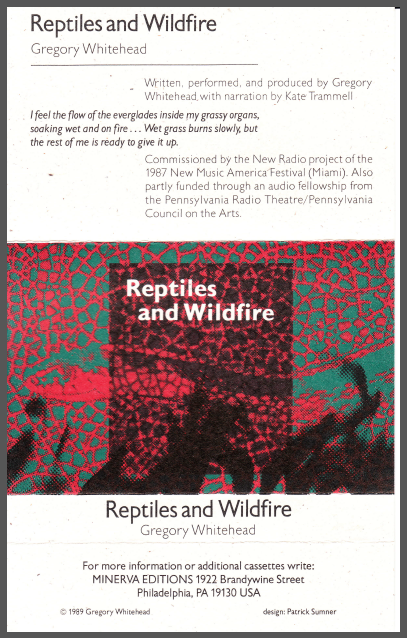
Another MINERVA EDITIONS release of a short docufiction made for the Miami New Music America Festival. Reptiles and wildfire coupled, like instinct and intuition; sometimes moving with each other, other times against, yet forever soaking wet and on fire.

Broadcast many times over in a variety of contexts, and now released into the digital everglades:

You will note the address for MINERVA EDITIONS. From 1987-1992, I lived in Philadelphia within walking distance of the abandoned Great Eastern penitentiary, Duchamp’s étant donnés, the Mütter Museum, and the Rodin portes d’enfer. Each had an influence on my thinking during those years and are still roaming around my brain.


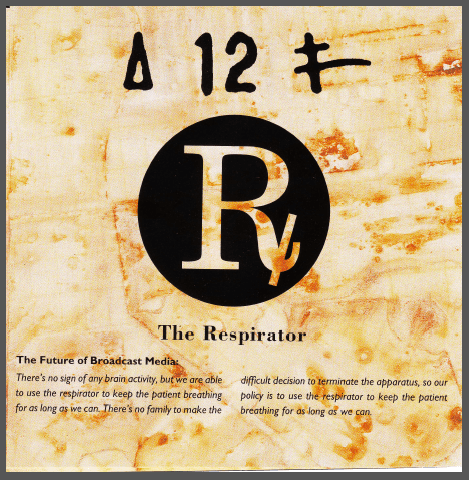
The Respirator

and other outcasts (1989)

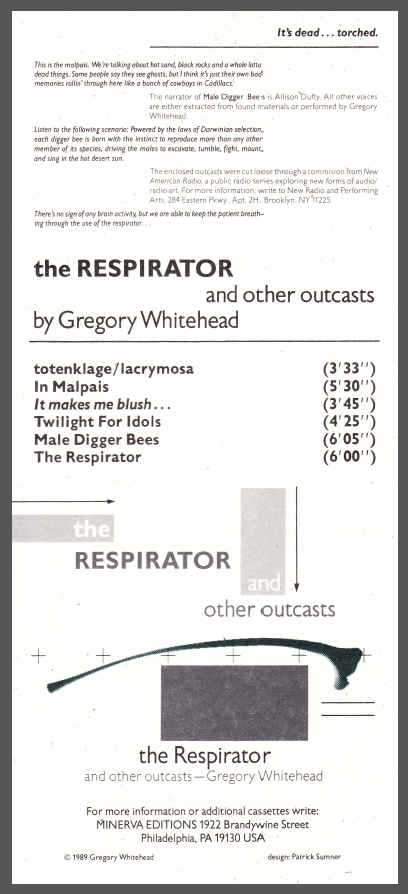
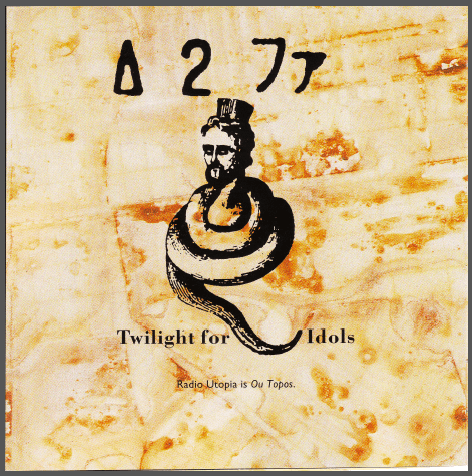
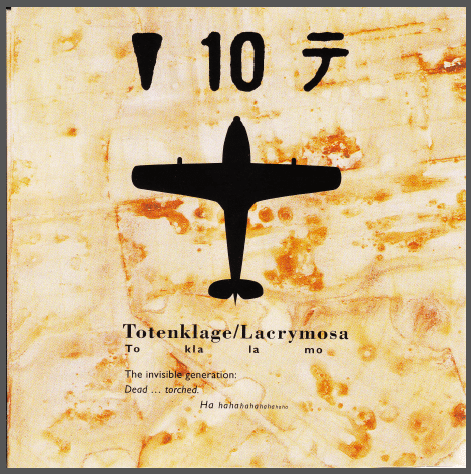
Another MINERVA EDITIONS release, mixing stories with purely invented sound beds such as In Malpais, with voice works like totenklage/lacrymosa and Twilight for Idols.

The title track takes an actual quotation from a magazine article about traumatic brain injury, which I then re-voiced and subjected to multigenerational entropy and eruption, in the style of Ziggurat and other earlier pieces.

If not strictly autobiographical, The Respirator certainly draws in spirit from my own experience in a near-fatal car crash at age sixteen, suffering injuries which rearranged my subjectivity in ways that took a very long time to get sorted.

Several of these pieces were also included in the 1993 Staalplaat CD, The Pleasure of Ruins, clickable below:


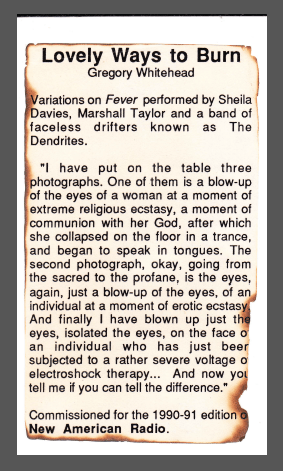
Lovely Ways to Burn

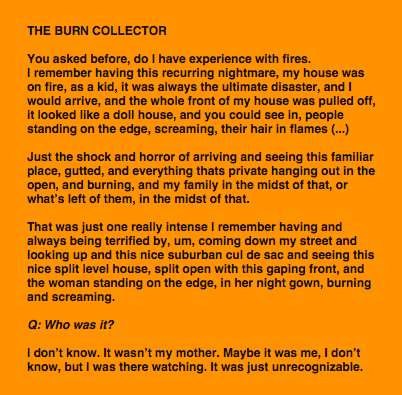
A hybrid documentary play, weaving together three stories: a scripted witnessing of an electrocution; documentary interview memories of burns, fires and suburban oblivion; and an imaginary philosopher on the phenomenology of fire, neurobiology and the gaze of ecstatic death.

EYES GOT FEVER

Created for New American Radio in 1990; released on cassette  in a very limited and hand made (and hand singed) by MINERVA EDITIONS; now released into the pyretic commons:


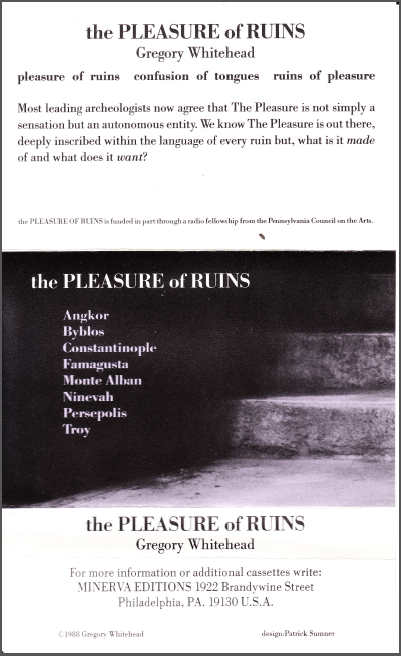
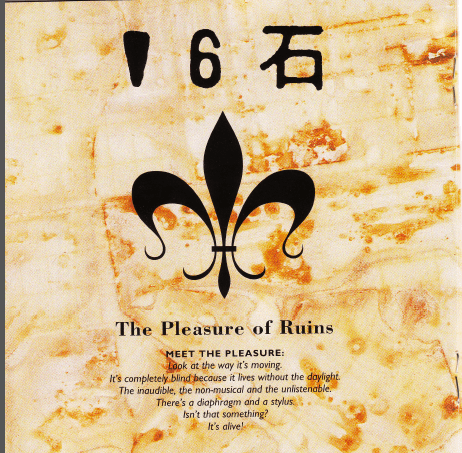
The Pleasure of Ruins

WHAT DOES IT WANT/

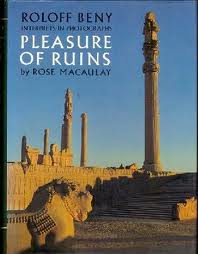
Inspired by the book with the same title (by Rose Macauley, with remarkable photographs by Roloff Beny), I set out to conjure an acoustic ruin through the poetic disintegration of a chanted list of global ruins, using the technique of rhythmic cyclical “eruptions” that I had developed in Disorder Speech.

At the time, there was a good deal of heavy cultural theory about libidinal flows and “economies of pleasure” in the air during the late 1980s, an irresistible invitation for humor; thus I proposed a sort of radiophonic archeology of pleasure, unfolding (or degenerating) in real time.

With the exception of a tour guide speleologist and a few other documentary scraps, the only voice used is my own, through a variety of personae.

Commissioned by the brave New American Radio series, under the direction of Helen Thorington and Regine Beyer, The Pleasure of Ruins has been broadcast throughout Europe, Australia and North America, in all of its ruined pleasures:

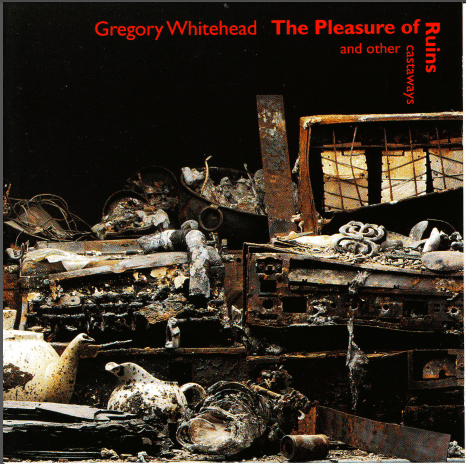
The Pleasure was resuscitated with a variety of other castaways on a 1993 Staalplaat CD release. I have a small number of copies of the original MINERVA EDITIONS cassette release, available to serious collectors.

Let me here sing praises for Patrick Sumner, whose stunning photographs and design work enlivened the MINERVA releases, as well as the Staalplaat CDs. The photograph below shows the salvaged remnants of a house owned by Patrick, and Sheila Davies, burned during the terrible fire that rampaged through the Oakland hills in 1991.


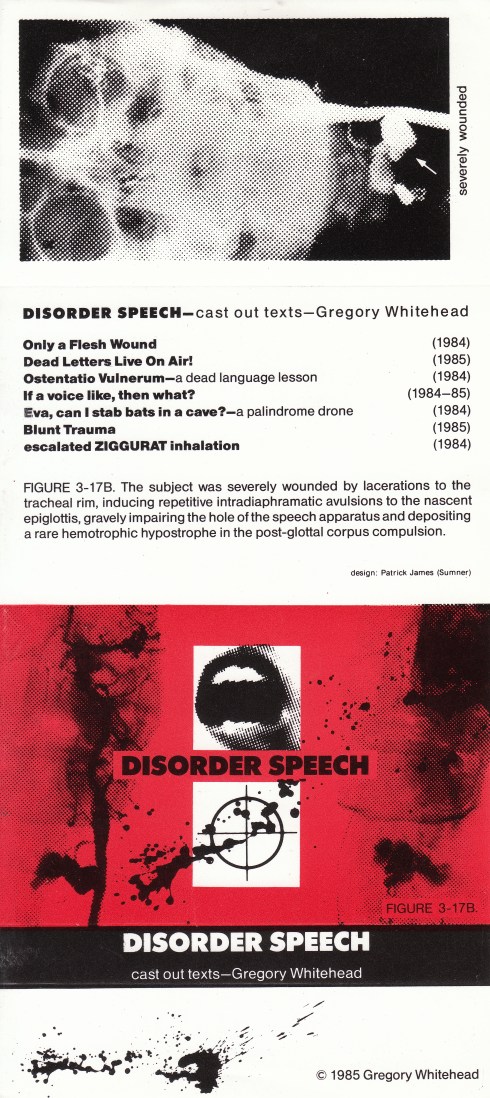
Disorder Speech

IF A VOICE LIKE, THEN WHAT?

A cassette release of short audio razorgrams made in 1984/85. During those early years between 1980-1985, I was intensely interested in analog editing; to this day, I remain convinced that there are qualities in the analog cut – a physicality of acoustic energy – not possible to simulate in the digital realm. Part of this might be explained with reference to the kinetic investment; editing for long periods of time is physically demanding and logistically complex, keeping track of dozens of slivers of audio tape that carried no searchable file names.

In production workshops, I recommend that all students learn analog editing, in the same way that photographers should all experience the joys of the darkroom. The artisanal nature of the analog editing process slows down thought, in a positive way. Processes that become too easy lead inevitably to lazy thinking and flaccid broadcasts.

The philosophical/poetic overtones of physical cutting also attracted me, as I developed ideas about the “woundscape”, and about the razor cut wound as an expressive opening, with a story to tell. In addition to ideas about the razor wound/cut, I became fascinated with cyclical structures of generational decay and improvised eruptions;  one generation of voiced material would be copied and added to the montage, yet with several fresh spliced slivers of eruptive sound.

Through time, this process created an unusual rhythmic pattern, with an acoustic depth of field shaped by the subtle shadings of analog degradation across the generations, a result that I found (and still find) compelling.

Eva, Can I Stab Bats in a Cave explores the anomalies of live vrs. recorded voice, and also offered much fun in the studio as I learned to vocally replicate 1/4″ tape played backwards, which seemed a timely skill to have in 1984.

Several of these pieces were used in dances by choreographers such as Karen Bamonte and Susan Salinger; they were also included in audio art compilations released by Tellus and others.

Disorder Speech circulated very widely through the cassette underground; a few copies are still available, for serious collectors.


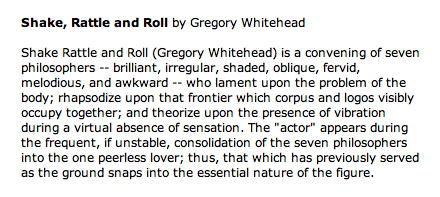
Shake, Rattle, Roll

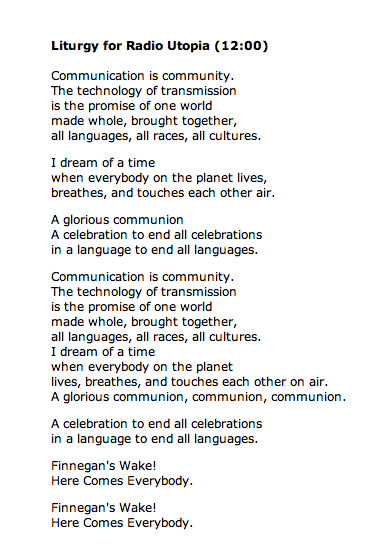
Shake, Rattle, Roll is a radio manifesto dating from 1993. I used every category of material at my disposal, and every compositional and editing technique, explored in shorter castaways; digital audio tape was part of my studio by then, used in tension and interplay with my workhorse Otari reel-to-reels. To decay or not to decay, among my questions.

Made during a very intense period of two weeks for New American Radio, the hybrid assemblage explores themes of structural entropy in relation to free play; the living dancing with the dead; the bottomless cave mixed with the ephemeral utopia; songs collapsed into screams and scrambles; language elucidated and on the verge of disintegration.

Sheila Davies (an ideal listener, to be sure) wrote:

Later distributed in a lovely black box by the indispensable Netherlands V2, together with a companion piece, Degenerates in Dreamland.

The play/performance has received many dozens of broadcasts in every conceivable context, and I enter its circles and cycles into the cultural commons, though the V2 release is quite stunning in its own regard, and is still available here.