

IF A VOICE LIKE, THEN WHAT?
A cassette release of short audio razorgrams made in 1984/85. During those early years between 1980-1985, I was intensely interested in analog editing; to this day, I remain convinced that there are qualities in the analog cut – a physicality of acoustic energy – not possible to simulate in the digital realm. Part of this might be explained with reference to the kinetic investment; editing for long periods of time is physically demanding and logistically complex, keeping track of dozens of slivers of audio tape that carried no searchable file names.
In production workshops, I recommend that all students learn analog editing, in the same way that photographers should all experience the joys of the darkroom. The artisanal nature of the analog editing process slows down thought, in a positive way. Processes that become too easy lead inevitably to lazy thinking and flaccid broadcasts.
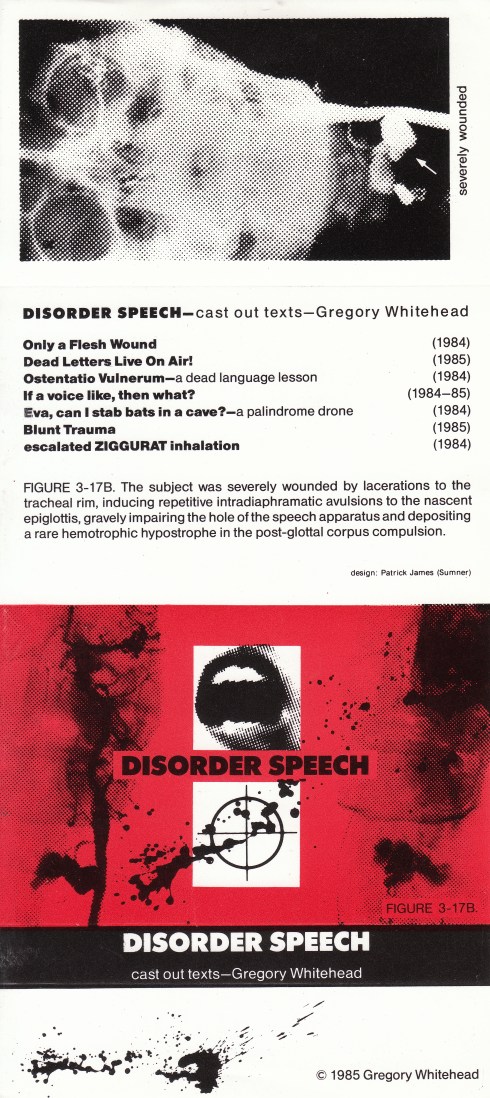
The philosophical/poetic overtones of physical cutting also attracted me, as I developed ideas about the “woundscape”, and about the razor cut wound as an expressive opening, with a story to tell. In addition to ideas about the razor wound/cut, I became fascinated with cyclical structures of generational decay and improvised eruptions; one generation of voiced material would be copied and added to the montage, yet with several fresh spliced slivers of eruptive sound.
Through time, this process created an unusual rhythmic pattern, with an acoustic depth of field shaped by the subtle shadings of analog degradation across the generations, a result that I found (and still find) compelling.

Eva, Can I Stab Bats in a Cave explores the anomalies of live vrs. recorded voice, and also offered much fun in the studio as I learned to vocally replicate 1/4″ tape played backwards, which seemed a timely skill to have in 1984.
Several of these pieces were used in dances by choreographers such as Karen Bamonte and Susan Salinger; they were also included in audio art compilations released by Tellus and others.
Disorder Speech circulated very widely through the cassette underground; a few copies are still available, for serious collectors.



 Gregory Whitehead